

Western Civ: Kill It Or Keep It?
It's Baby and Bathwater Time


That was the topic of a panel I recently led with National Geographic explorer/Harvard anthropologist Wade Davis, trauma specialist Dr. Gabor Maté and Dutch-Indonesian activist Indra Adnan (more on how that turned out in a moment!).
The hope was, in these times of troubled national birthdays, where cries to #burnitalldown are rising from all sides of the political spectrum, to explore if there's something in this Enlightenment experiment worth saving, or if the whole project has been tainted and doomed from the start.
Because fierce critiques of Western Civilization are absolutely having a moment, from articles like this in the New Yorker, detailing Britain's atrocious treatment of the Mau Mau rebellion in Kenya and how they used that experience to fine tune their brutal tactics in Northern Ireland.
To Chinese kids on social media chanting bai lan which means "Let it rot!"
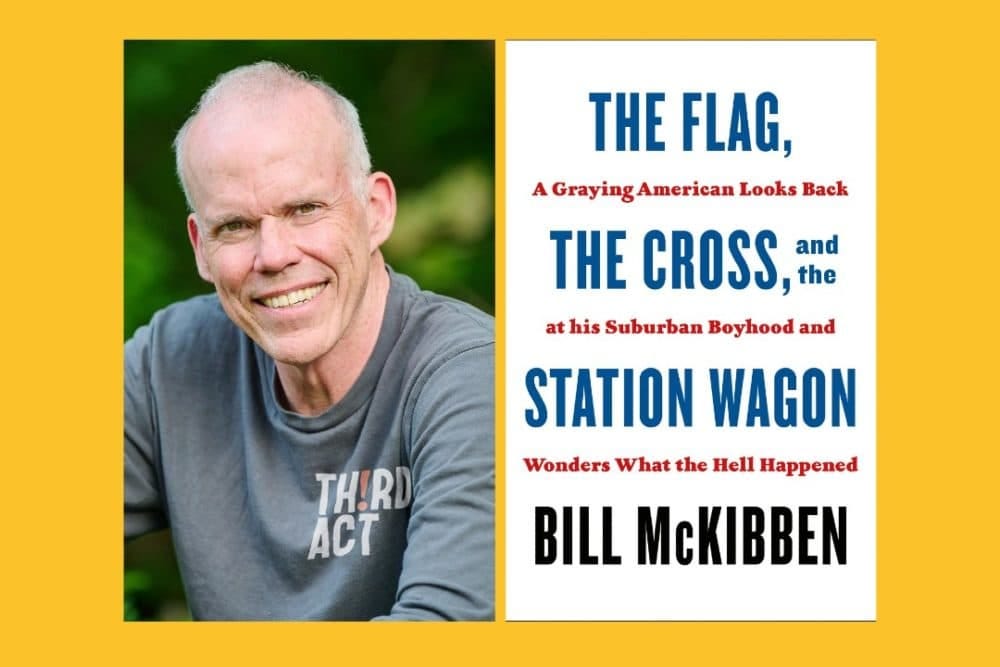
To Bill McKibben, that paragon of Protestant environmental liberal conscientiousness having a serious rethink about the whole American project in his just released The Flag, The Cross and the Station Wagon. “A graying American looks back at his suburban boyhood and wonders what the hell happened!:
You could almost think of this broader debate as a cage match between Steven Pinker (a staunch defender of Modernity, for all its faults) and the 1619 Project (a fierce indictment of America's original sin of slavery and genocide).
And who "wins" matters here, because as the Second Law of Thermodynamics reminds us, it's way easier to break stuff than make stuff. Putting Humpty (or civil society) together again, is much harder after you've bumped him off the ledge he was teetering upon.
🧪 Our Current Civilization Experiments
When you think about it, there's a ton of interesting experiments that we've conducted over the past half a millennium that we've simply grown up with, and assumed were either immutable laws of nature, or the pinnacle of evolution.

Things like:
Separation of Church and State (At first a no-brainer, cuz who likes theocracies these days? But then when you consider Nietzsche's 'be careful when you kill your gods because you strip out the moral fabric of your society,' caution, it kinda makes you wonder if we're not rudderless without some shared values to agree on?) Now, we’re seeing a MAGA revision of US history inserting and insisting that theocracy is a better option than this lily-livered partitioning.
Elevation of Private Property over the Commons (#Marxistssuck has reigned supreme for at least the last 30 years, but when we think of the privatized wealth/socialized harms of late stage Capitalism and the Tragedy of the Commons (oceans, air, water, wilderness) it's hard to conclude our version of mutant markets is the no-ifs-ands-or-buts best way to steward and distribute resources.) Mamdani on the one hand, Trump’s opening of Public lands to drilling and mining, and unfettered AI buildout on the other.
Rule of Law and Due Process (Innocent until proven guilty, etc) (While we seem to have gleefully abandoned this ideal in the Trial by Twitter era, and the right high dollar lawyer can bend the staunchest statutes to their client's benefit, is there something worth defending here? That no one is above the law, and that the observation of it, is what gives validity to its justice.). Habeas Corpus and the right to not be detained without cause and charge (featuring prominently in current ICE activities). Was considered so essential it predates the US Constitution and was always extended to non-citizens as well!
Belief in "Free" Markets (While our current forms are anything but free, riddled with lobbying, dark money, predatory IP strategies, government subsidies and global inequalities, is the old school idea that markets are the most effective means by which to innovate and create prosperity still true, or was it a trickle down scheme all along?). Does Universal Basic Income have a place? Do Democratic Socialists have a point?
Valuing of Representative (Not Direct) Democracy (One person, one vote is a frequent rallying cry, but it's not really how most Western societies govern. Is digital direct democracy (finally, a meaningful use case for blockchain!) a necessary progression, or should we give up this charade as the Romans did, and seek Plato's "Enlightened Despot/Philosopher Queen" to guide our way through tough times?) (Lots of current strongmen, from Bolsonaro, to Orban, to Erdogan are eagerly awaiting our verdict).
Universal Human Rights (All men and women are created equal and entitled to...regardless of where they live or what they believe.). Or is it closer to JD Vance’s recent pronouncement “America is not just an idea, it is also a very specific people”. Not Haitians. Not Somalis (whose moral turpitude, Stephen Miller helpfully clarified, can persist for generations).
There are plenty of others.
But with each of these fairly novel and potentially valuable innovations, we've had false starts, unintended outcomes, broken promises and irreconcilable differences. And that's widening cracks in the foundations of the American Experiment, and much of Western liberalism.
Many of these notions are under direct attack right now. From the blood and soil Alt-right ethno-nationalists, there's a rejection of universal human rights. If you don't carry the same genes, defend the same fatherland, and worship the same gods, you don't get the same dignities.
Basically, look after our own, and the Global South can rot.
Gerrymandering Republicans have been increasingly quick to remind everyone lately "we don't live in a democracy, we live in a republic!" (In an era of “Great Replacements” it's the thin end of a wedge justifying minority rule and electoral college shenanigans).
As we head into November and cynical redistricting has accelerated from once in a decade after the national census to every election cycle, this is mattering more and more.
Social Justice advocates have been abandoning equality of access (i.e. non-discriminatory opportunity) for equity of outcomes (active redistribution and representation based on demography and restorative/reparative justice).
While this may at first feel like principled advocacy for the under-served, it’s actually a structural rejection of the American Dream. (everyone has access and a fair shot on a level playing field.)
And never mind reparations for slavery or BIPOC representation on corporate boards and college admissions that got so much airtime a few years back. These conflicts are about to go inter-generational too.

As millennials and GenZ rise as a voting block, expect all sorts of tax laws and loopholes pitched and enjoyed by Boomers (like super favorable capital gains and home ownership breaks, Medicare etc) to get reversed as the generations boxed out of all that wealth creation insist on claiming their share of the pie.
These aren't small movements. And they have massive implications. Not just in the next two or four years, but in the decades to come.
So the question remains––are these Enlightenment values good ideas, imperfectly executed, and we should take this 7th inning stretch of the last two years to dust them off and rehabilitate the lot?
Or…
Were they empty promises masking a far darker and less noble project of empire and inequity?
🎤 An (Unexpectedly) Lively Debate
Well, that, at least, was the setup to that panel discussion that day...
But I barely got to tee it up. Less than two minutes into our introduction Gabor grabbed the mic.
What followed was a 20 minute harangue on centuries of conquest, colonization, black ops government projects, and all manner of harm, from Spanish conquest of indigenous tribes, to the Belgian Congo, to CIA backed Guatemalan death squads to Canadian boarding schools for indigenous children.
And after each example, Gabor then grilled the audience, "Do you know how many people died? WHY DON'T YOU KNOW??? Because, a "liberal education" hid all of these atrocities from you to promote the lie of Western superiority!"
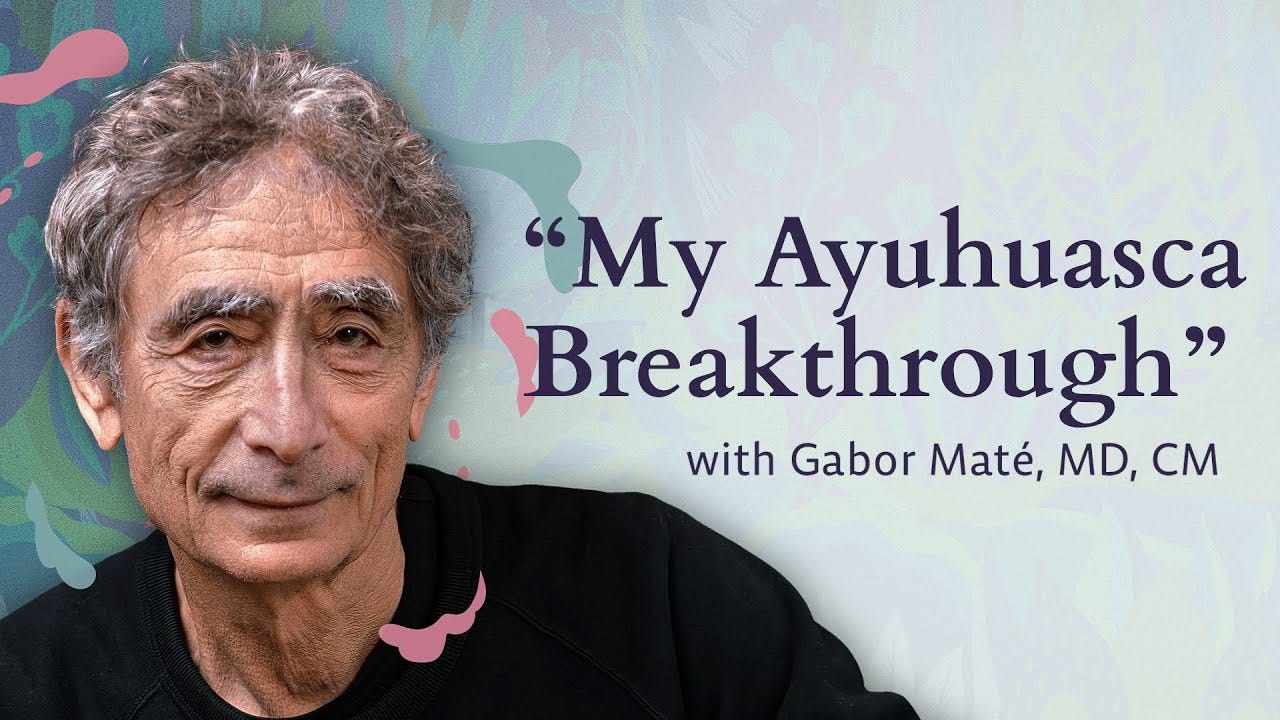
(And for those of you confused by how the gentle doe-eyed ayahuasca and trauma advocate Gabor Mate could do such a thing, rest assured, he's got a salty side too ;)
Now, Wade wasn't having it, and began to shift visibly in his seat, muttering under his breath. Although both of them live within an hour of Vancouver, this panel was the first time they'd actually met in person, and genial sparks were flying.
"I hear what you are saying Gabor, but some of the facts simply don't play out. Genghis Kahn murdered millions, Attila the Hun, Stalin, Mao...the list of human atrocities is endless and spans across time, space and cultures, it's not the sole province of the colonial West," said Wade, channeling his inner anthropology professor. "And, your claims about the Canadian boarding schools, simply aren't true. We haven't exhumed any of the bodies, and simply don't know the extent of the tragedy."
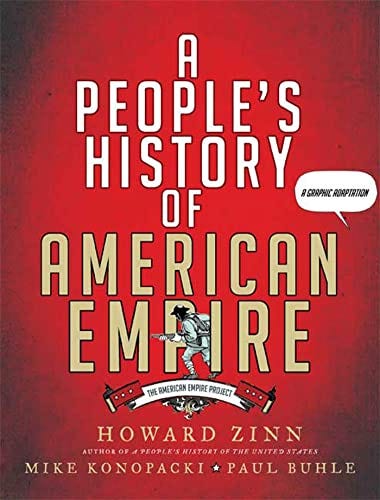
But Gabor wasn't having any of it right back. He doubled down on his critique, which sounded increasingly like an undergrad who'd just binged Howard Zinn's People's History of the United States and Noam Chomsky's Manufacturing Consent, and had returned to lambaste his bourgeoise parents over the holidays.
And that's when it hit me. We were live-debating the Pre-Tragic, Tragic, Post Tragic dialogue. Just upside down and backwards!
The reason Gabor had jumped in, and taken issue with the whole premise of the panel, was because he had assumed that what was about to happen was a pre-tragic justification, a propping back up of "'Merica, Love It or Leave It" sentiment.
Instead, he insisted that we acknowledge the Tragic parts of the Western Legacy. The slavery and genocide and wars of empire, and all of the bare knuckles power games going on under the hood of apple pie patriotism.
But Wade was holding an even more intimate knowledge of the clash of civilizations and its brutal costs. He's spent half a century living with indigenous peoples from the Amazon to the Andes and from the Himalayas to the Serengeti. He knows cultural and actual genocide. Up close and repeatedly. (Check my all time favorite TED talk of his on the collapse of ethnodiversity worldwide).
Wade was holding the pole of the Post-Tragic, that ultimately there's a reason for deep hope. “Pessimism is an indulgence," he reminded Gabor. "Despair an insult to the imagination.”
But interestingly, it was neither of these Canadian Bull Mooses hooking horns, that delivered us to redemption. It was Indra, patiently waiting her moment, amidst the pyrotechnics.
💼 Always a Mixed Bag
"You know," she said, I am the product of all of the things you've been talking about Gabor, I am of mixed race, of colonizer and colonized Dutch and Indonesian, and in my family history is all of the grief and suffering you're insisting we acknowledge."
"And...I am here. We are here. This conversation, these relationships is how we lead ourselves forward. It's the way into the future that interests me most, not re-litigating all the sins of our ancestors." (I am paraphrasing, she was more eloquent).
You could feel the audience relax, and settle into something that felt deeply true, and provisionally hopeful. Gabor was right, the last thing we need is a retreat back into Jolly Hockey Sticks Pre-Tragic mythmaking about Western Civ.
It has, and always will be an imperfect, contradictory mixed bag.
But, as Wade insisted, nobody ever promised us a rose garden. And even the briefest surveys of human culture reveals a constant churning violence we've never really escaped. When discussing the Yanomami tribe in the Amazon, he noted that all the men died young from spear fights. But then one guy lived until he was in his sixties, which the other men deemed suspicious, so they speared him for growing too old!
#dontfearthereaper
And Indra was perhaps the rightest of all. Can we sit in the deep acknowledgment of the pain of the past, while finding the simple courage and clarity to live into the future we want?

As another wise woman, Dolly Parton once said, "ain't no saint without a past, ain't no sinner without a future!"
May our road ahead give us a shot at redeeming them both
– Jamie
PS. And curious as to your own takes on the premise of that panel––do you think there are crucial elements of the Enlightenment experiment we should fight to preserve, or are you leaning towards the #burnitalldown camp? Why? Where do you find your hope for the future?
Hi Jamie – Indra here! Thanks for the mention – it was certainly a boisterous conversation and one that rippled through that festival for the following couple of days. But for the sake of my own colleagues and audience at The Alternative Global, I think I should set the record straight on what I said. (For anyone interested in listening to the whole conversation https://www.youtube.com/watch?v=vPXiHSFoMYk&t=758s, I begin at 10.33) I’m a political entrepreneur and author of the book “The Politics of Waking Up: Power and Possibility in the Fractal Age" (Perspectiva Press) which describes an emergent ecocivilisation. I wasn’t contradicting Gabor, I was encouraging him. I reminded him that the current socio-economic-political system that dominates the public space, was designed by men. But that in the past 30 years, another system, historically held by women in the private and personal space, is now rising and shifting these dominant narratives because of the increased connectivity between people, communities and planet.
This new system – arising from human individual and collective waking up and self-organising – does not arise out of Western Civilisation but despite it, as a cosmolocal, global phenomenon. It is alive to - but not reactive to - the failures of modernity, patriarchy, colonialism, whilst building regenerative structures and pluralist culture. For that reason the emergent system appears as a parallel development, closer to Bucky Fuller’s idea of a new system which makes the old one obsolete. I’m in the process of writing a new introduction for a Second Edition of the book to catch up with AI, China and the exponential growth of feminine cultures and structures if you’d like me to send you a copy when it’s done?
Great thoughts here, and I like the view through the pre-tragic, tragic, post-tragic framework.
My conjecture is that there are both Enlightenment elements worth keeping, and there is no need to burn it all down because many aspects of our current civilization will be burned down whether we choose it or not. I agree with Gabor, Indra, and Wade. Humans have the capacity to form cooperative civil structures that allow them to prosper, but those institutions are also subject to corruption and being used to subjugate. And while Western civilization is offender #1, it's not universal.
I think the world is complex and interrelated. As Garret Hardin put it, "You can never do merely one thing". Or John Muir said, "When we try to pick out anything by itself, we find it hitched to everything else in the universe."
We all have different morals formed by our life experiences. So one thing is good for one and bad for another. When the fox hunts the rabbit, one outcome is good for one creature and bad for the other. The moral judgment depends on which creature you are.
Civilization is a complex web of interactions shaped by both environmental conditions and conscious thought, action, and morality. What we get is a variety of societal structures. It's evolution by natural selection of ideas. Different societies are on different parts of the arc of this evolutionary process. Many indigenous societies have existed for thousands of years. Our nascent Western civilization really only got going in the Industrial Revolution. It's grown rapidly and created more novelty, complexity, and stuff than ever before. We've created lots of good stuff and lots of bad stuff—but how to categorize them is determined by who you are and what you believe. Hence, culture wars.
However, I tend to agree with Joseph Tainter's framework, in which declining marginal returns in complex societies often lead to their collapse. Many past civilizations that collapsed have had at least some component of environmental degradation, often due to their own activities. That's also usually coupled with internal societal issues. Western civilization has both. I think collapse is inevitable.
But collapse doesn't mean universal death and destruction. It just means a rather rapid simplification of how we do things. And maybe a "Great Simplification," as Nate Hagens calls it, is exactly what we need to get back to the things that matter. The beautiful things that make life worth living. The things before smartphones, social media, stock markets, and server farms. The simple things that inspired awe and reverence for nature and the cosmic story being played out, of which we are a part. "The world in a grain of sand, and heaven in a wildflower," as Blake wrote.
So yeah, I think much of it will burn down, and we'll remember many good lessons from Enlightenment thinking. And then gradually, we'll forget and do it all over again.