

Better Red Than Dead
on the recent panic about all things Socialist

If you haven’t noticed lately, there’s been a non-stop barrage of op-eds and call outs regarding the Red Menace of Communism sweeping the land.
On the 250th Anniversary of this Great Nation, our Fearless Leader took the time to warn of its threat.
The Wall Street Journal too, has been posting scoldy editorials on the naivety of Americans and how they’re about to fall for the same schtick that led to Stalinist death camps.
Did someone say “Stalinist Death Camps?” Cue Jordan Peterson, rising from whatever detox ward he’s been in lately, to shout from the rooftops in his perfect Kermit tremolo—”beware! beware the war against the heroic individual! That way lies ruin!!!”

#verklempt
But also the Free Press, where Coleman Hughes just dropped a bit arguing that Gen Y/Zers missed the inoculations of the Cold War and are surprisingly susceptible to critiques of Late Stage Capitalism and promises of actual social security.
Now, it doesn’t take three degrees in political science to track where all this ink is coming from.
Some (looking at you, Stephen Miller and DJT) is just lazy tribalizing and fear-mongering. It’s easy to call your enemies “Marxist Terrorists” and hope it stirs some vestigial sense of 20th Century Otherness that plays at the voting booth.
But much of this recent fervor comes down to one Zohran Mamdani and the flotilla of Democratic Socialists that have recently been winning Democratic primaries here and there.
It’s scaring the shit out of the Establishment, Right and Left.
***
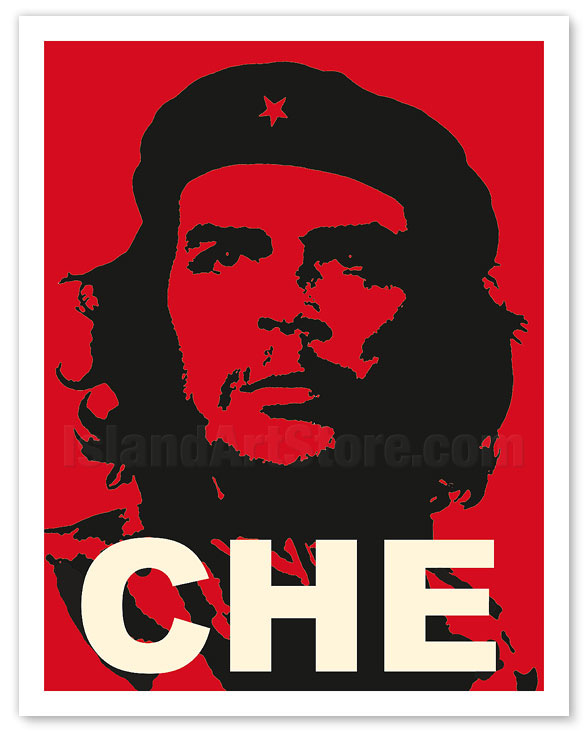
But after reading enough of these articles, I started to spot the pattern: the arguments were all dusted-off chestnuts from the Cold War. Even their bogeymen–Stalin, Mao, Castro, Chavez–hadn’t been meaningfully updated.
Capitalism was an unalloyed good. Free markets were the engine of democracy.
Anything that critiqued it was automatically socialism, or even worse, outright Marxism.
These were ideological positions rooted in the past, much more than they were intellectual positions making sense of our present.
So I conducted a little thought experiment. I decided to hop into the WayBack Machine and see what the conditions were like on the ground back when most of these arguments were still in their prime.
And as decent a place as any to stop is the four year period between 1968 to 1972.
Kicking off as it did with riots in Paris, Prague and Chicago, and Stanford professor Paul Erlich’s Population Bomb. He almost single-handedly put the neo in Neo-Malthusianism.
In that book, Erlich spoke grimly of global famine and collapse by the 1980’s because we were consuming too much and having too many babies on a limited planet. It rocked the world with its dire predictions.
Now, the Accelerationists weren’t gonna simply take that best-selling broadside lying down…
In 1970, Milton “Free Market” Friedman countered with his seminal essay in the New York Times, A Friedman Doctrine.
In short, Friedman “centered” what had been an otherwise fairly fringe economic theory–that corporations’ sole purpose, ethically, and legally, was to make the most money possible for its owners. Period.
Any other ambitions or obligations to people or planet (think of the current backlash on ESG investing), was wrongheaded, inefficient, and subsequently illegal.
Heady times, it was!
“Growth and profit at all costs” as the only path to prosperity
OR
slam on the breaks to avoid cataclysm and collapse?
Two years after Friedman’s little turdnugget, the Decels got in another lick. That’s when MIT’s and the Club of Rome’s publication of Limits to Growth dropped.
The report considered five core parameters, population, food production, industrialization, pollution, and consumption of nonrenewable natural resources and calmly predicted a world of hurt if we didn’t get to trimming our sails, right sharpish.
Think about that–fifty odd years ago, with janky mainframes crunching punch cards at MIT, they called the collapse to come sometime in the next couple of decades. (recent recalculations have shown they weren’t far off).
A few years later, Julian Simon, a Growther economist, challenged Paul Erlich on his Chicken-Little predictions of scarcity in what became enshrined as The Simon-Erlich Wager.
They each put up ten grand to see if the price of natural resources would go up or down over time.
A decade on, Erlich lost the bet. Techno-optimists the world over rejoiced.
Prices on major natural resource commodities had shrunk, not grown. (though this trader’s analysis suggests Simon was lucky rather than good)
It seemed a vindication of our ability to forever pull rabbits out of hats…like magic.
#suckitmonkeys
(monkeys have a well-known Decel bias)
***
So that’s the gloss of the argument circa 1970’s. A back and forth between the OG Doomers and Accelerationists.
But, remember, it wasn’t just an intellectual debate. You’ve gotta think of the cultural context too.
This was post ‘68 assassinations of Kennedy and King (and those aforementioned riots). Vietnam. Watergate. OPEC cartels. Dreaded “stag-flation” on the horizon.
Commie Dominoes waiting to topple in Southeast Asia and Central America.
The ideological stakes were high.
If you weren’t with us you had to be against us.
So to critique balls-to-the-wall free market capitalism meant you were giving aid to the Marxists.
(A bi-polar world is always gonna be polarizing, you see)
To question whether Americans needed to guzzle so much gasoline and hamburgers and hoola hoops was unpatriotic, even dangerous.
Needless to say. Erlich and the sissy-Malthusians lost that 70’s show, along with the commodities bet.
Carter was shortly a one-term prez.
Reagan and Thatcher stripped away as much of the New Deal nanny state as they could.
Clintons, Bushes and Obamas all happily stuck to the free-trade, pro-growth script.
And with a few lumps bumps, and left-turns at Albuquerque, here we are.
Booming and busting, pedal to the metal, deregulated free market GloboCap FTW.
and e/acc posts on Twitter.
Interesting sidebar:
Despite the fall of the Berlin Wall and the subsequent dominance of capitalism worldwide, concerns about cultural Marxism are having an unlikely resurgence today.
Everything from DEI initiatives to vaccine mandates to carbon reduction is viewed through the prism of socialism vs. capitalism once again.
You can write off large chunks of this to savvy alt-Right framing.
Nothing scares old white people on Fox more cheaply and effectively than rebooting the Red Scare for today’s culture wars. The memes come pre-installed in those old geezers.
All you need is a Manchurian Candidate to set ‘em off.
#letsgobrandon!
(But there’s also some truth to tracing the Marxist DNA of everything from BLM, to SJW and DEI movements. For a considered both-sides debate, check out this recent conversation between Chris Rufo, the architect of the Critical Race and Gender backlash (and the “journalist” who took down Claudine Gay at Harvard), and Yascha Mounk, a professor at Johns Hopkins and writer at the Atlantic.
It’s kinda nice to see two folks on opposite ends of the political spectrum actually discuss and debate from informed perspectives!)
Back to the story.
***
So let’s hit the pause button in 1970 and see what the actual on-the-ground conditions where, when the original Free Market e/accs scored their big wins and we got half a century of unfettered GloboCap growth.
Back then, the world’s population was 4 Billion–half of what it is today.
CEO to worker pay ratios were a positively communal 25:1.
Today, we have 8 Billion humans alive and CEOs earn more than 300 times their employees wages.
That’s a doubling of population and an order of magnitude spike in pay inequality.
After a period of decreasing inequality up to 1970, the Have’s been having, and the Nots have been getting increasingly knotted.
The Brookings Institute tracks that today’s income imbalance is comparable to the early 20th century’s “Gilded Age” of robber barons and immigrant slums. Not exactly the best stat on our progress report.
Twenty five people currently own as much as the bottom half of humanity.
That’s:
25 : 4,000,000,000
A quick scan of those natural resources that Erlich and Simon wagered on doesn’t read so well either.
Sure, for every depressing statistic, you can pull up an upbeat one (as Our World in Data’s Hannah Ritchie does quite well in her latest Not the End of the World).
But without getting sucked into the hair-splitting, p-hacking data analysis, I think it is fairly uncontroversial to say that in 1970:
There was more of the Amazon rather than less.
Oceans were cooler. Reefs were healthier.
Old growth forests were more plentiful.
Aquifers were fuller.
So…
My question to the Accelerationist Capitalist (Piggies) is this: if you’re arguments for accelerating growth and innovation were forged in the early 1970s, when we had half the people on the planet, massively less stressed ecosystems and wildly lower income inequality, are they still uncritically true today?
And if you hold that they are still true, despite the worsening of many key indicators, how much longer will they remain true?
What if we have ten billion people, ten percent remaining of our fisheries, forests and aquifers, and 1000:1 CEO to worker pay?
How ‘bout five trillionaires owning as much as the bottom five billion humans?
Will that still warrant the same Ayn-Rand-on-Adderall justifications?
How ‘bout now?

How ‘bout now?

Is your commitment to “accelerating effectively” based on a current assessment of the facts, or an unwavering commitment to an outdated but nakedly self-serving ideology?
One that, if you track it’s lineage, clearly came of age at a time and place markedly different than the world we inherit today.
(Does a rising tide still lift all boats, or does it just give your mega-yacht enough clearance to scarper out the harbor and head to your private island?)
Because all of its huff and hubris comes baked in:
You’re with us or against us.
You’re a Capitalist or Commie.
You’re an e/acc hero or a Decel Doomer.
But that certainty masks an untethering from on the ground realities as they’ve been unfolding. It ducks a critical update of where we are half a century after these ideas first gained prominence.
To be fair to the pro-growth crowd, Paul Erlich didn’t predict the boom of the Green Revolution in agriculture or the increased efficiencies in mining.
But his basic premise, that you can’t have infinite growth on a finite planet isn’t wrong. We just had a few more kicks of the can still left in us. (including North American fracking that pushed peak oil back at least a decade)
Or take the Club of Rome Limits to Growth forecast from 1972.
Their projections have been scrutinized and revised ever since. One of the more notable recent reviews was in 2020 by a KPMG analyst in Yale University's Journal of Industrial Ecology. Turns out, even with up to date data, the Limits to Growth predictions tracking the worst case “if we do nothing to change our course” graph, have turned out to be pretty much how things are going.
The Degrowthers weren’t wrong, so much as they were way early.
We ignored their cautions and conducted the alternate experiment–Let it Rip, Balls to the Wall, and let’s see how it goes.
The question for us today, is it better to come to our senses late, or never?
So to recap: our current debates about Growth vs. Degrowth, and Socialism vs. Capitalism are unhelpfully bogged down in ideological warfare from the last century.
Accusations of CommieDoomerDecels vs. VisionaryUtopianAccelerationists are thought-terminating cliches that erase anything resembling the kind of nuanced, collaborative debates we need to be having.
Effective Accelerationists (and a host of other more traditional free market boosters) aren’t separating the legitimate benefits of innovation and technological problem solving from the collateral damage of over-consumption and growing inequality.
At a time when we should be humbly re-assessing damn near everything about the neo-liberal experiment of the last fifty years, we’re doubling down on creaky old maxims from the Cold War.
And never mind the knee-jerk Lefties prattling on about this stuff.
Take Joseph Stiglitz, the Nobel Prize–winning economist and former chief economist at the World Bank. He knows how our global system works better than most.
His conclusions are stark.
“The simultaneous waning of confidence in neoliberalism and in democracy is no coincidence or mere correlation. Neoliberalism has undermined democracy for [fifty] years. . . . The numbers are in: growth has slowed and the fruits of that growth went overwhelmingly to a very few at the top.”
So how ‘bout it ?
Can we shelve the finger wagging Ayn Rand reheats and the sick burns on X?
Can we reconsider our very real limits to growth this year, rather than yesteryear.
Might we even learn to decelerate effectively?
By applying all of that gee-whiz Silicon Valley know-how to doing more with less and sharing more with everyone else?
And if we ever do get to Artificial General Intelligence who can give us the cheat codes to our very survival…
Isn’t that what it would likely tell us anyways?
Create more. Share more. Consume less?
Now that would be a revolution actually worth tweeting about.
A lot of us are definitely on essay overload, but this, as usual, Jamie Wheal, is exactly right. Conclusion, absolutely: Create more. Share more. Consume less -- and we'd all be better for that. So start now. Each of us. Yes!
The people screaming “socialism” every time someone proposes cheaper housing or healthcare never seem bothered that we already have socialism for banks, oil companies, defense contractors, and billionaires. Apparently public money becomes tyranny only when ordinary people receive it. The Cold War vocabulary survives because it saves the wealthy from answering a modern question: if capitalism is working so brilliantly, why does everyone need three jobs while twenty-five people own half the planet?